
- Agronomics
- Diseases
- Asian Rust
- Anthracnose
- Bacterial Blight
- Bacterial Pustule
- Bean Pod Mottle Virus
- Brown Stem Rot
- Cercospora Leaf Blight
- Charcoal Rot
- Downy Mildew
- Frogeye Leaf Spot
- Green Stem Syndrome
- Iron Deficiency Chlorosis
- Phytophthora Root & Stem Rot
- Powdery Mildew
- Rhizoctonia
- Seedling Diseases
- Septoria (Brown Spot)
- SCN (Soybean Cyst Nematode)
- Soybean Mosaic Virus
- Stem Canker
- Sudden Death Syndrome
- Viruses
- White Mold
- Pests
- Biological Control
- Diagnostic Tools
- About Us
- Library
| Disease: Green Stem Syndrome |


Your soybean checkoff.
Delivering Results.
How Solar Panel Installation Works in Massachusetts Homes
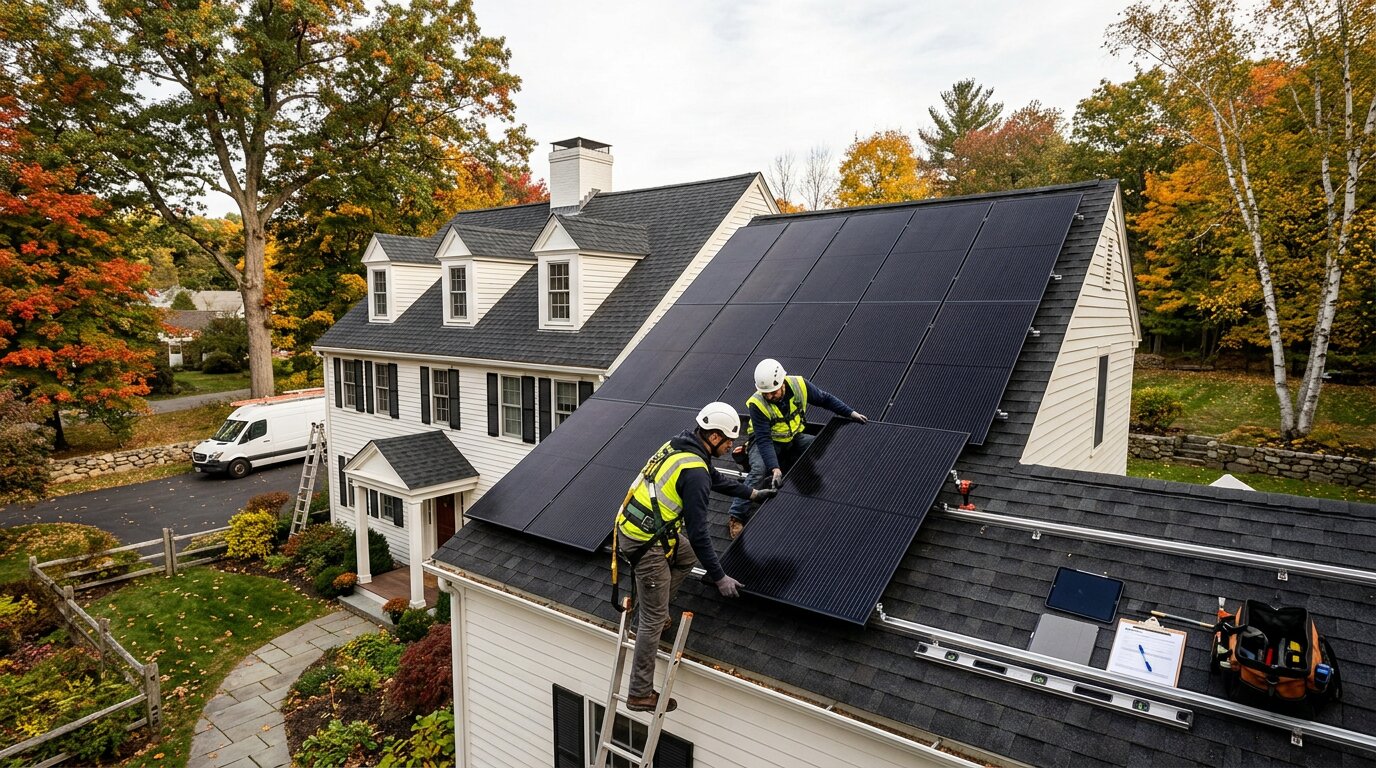
If you’re considering solar panels for your Massachusetts home, it’s not just about picking a product and placing it on your roof. You’ll need to handle assessments, design, permits, and regulations before installation even starts. There are also programs and incentives unique to the state that can impact your investment. Knowing what to expect at each step will help you avoid surprises and maximize benefits—but first, let's look at how the process truly begins.
Contractor Selection and Evaluation
Selecting the appropriate contractor for solar panel installation in Massachusetts involves a systematic approach. Initially, it is advisable to obtain quotes from several companies, which allows for a comprehensive comparison of both pricing and services, including information from Solar Panels in Massachusetts.
It is essential to confirm that each contractor possesses the necessary licenses and certifications, including the North American Board of Certified Energy Practitioners (NABCEP) certification.
In addition to assessing credentials, requesting references from previous clients can provide insights into the contractor's reliability and quality of work. It is also prudent to consult the Massachusetts Attorney General's office to check for any recorded complaints against the contractors under consideration.
Visiting previous installations can further aid in evaluating the quality of the solar panels used and help clarify any concerns.
It is important to discuss various elements of the installation process, including available incentives, tax credits, net metering options, and the conversion of direct current (DC) to alternating current (AC).
Furthermore, ensuring that the contractor is knowledgeable about Massachusetts building codes and privacy policies is crucial for compliance and safeguarding personal data.
A thorough assessment and selection process can lead to optimal energy savings, a reduction in carbon emissions, and improved financial outcomes over time.
System Design and Structural Assessment
Prior to the installation of solar panels, conducting a comprehensive system design and structural assessment is critical to ensuring that the roof can adequately support the added weight and configuration of the panels. Contractors evaluate various factors, including the dimensions, pitch, and sunlight exposure of the residential roof, to optimize solar energy generation and associated cost savings.
The design process involves creating tailored photovoltaic (PV) solutions aligned with the household's energy consumption patterns, which also incorporates considerations for battery storage and net metering options relevant to the homeowner's needs. It may be necessary to implement structural upgrades to bolster support for the solar panels, ensuring compliance with relevant Massachusetts building codes throughout the process.
Additionally, connecting the solar energy system to the electrical grid facilitates potential reductions in electricity expenses, the accumulation of various energy incentives, and a notable decrease in the household's overall carbon emissions.
For further information on these processes and options, please reach out to our team.
Permitting and Regulatory Compliance
Installing solar panels in Massachusetts necessitates adherence to a defined permitting and regulatory compliance framework. Prior to commencement of installation, contractors are responsible for securing local permits to ensure that the residential solar system complies with state regulations, as well as the prevailing Electric Code and Building Code standards.
Inspections conducted by wiring and building officials are mandated, particularly when the system involves battery storage, alterations to the roof, or structural modifications. Upon receiving the necessary approvals, the solar panel system can be connected to the electric grid for net metering purposes, which may result in cost savings on electricity bills.
Additionally, renewable energy generation contributes to reduced carbon emissions. This structured process is instrumental in safeguarding the integrity of residential properties and ensuring compliance with legal requirements.
Application to the SMART Program
The SMART program is an established financial initiative designed to promote solar adoption in Massachusetts by offering homeowners monthly incentive payments tied to the energy output of their solar systems.
The application process involves direct assistance from contractors, who will guide applicants through a series of steps, including an initial assessment, the installation of solar panels, and the completion of necessary paperwork to qualify for state incentives.
Homeowners are required to develop a tailored solar solution for their roofs. This process must adhere to specific technical requirements and involves the use of photovoltaic (PV) panels, which function by converting sunlight into direct current (DC) electricity. This DC electricity is then converted to alternating current (AC) for use in residential applications.
By participating in the SMART program, homeowners can expect a reduction in their electric bills and a decrease in their overall carbon footprint.
The program also provides a structure for predictable financial savings over time, making it a viable option for those considering solar energy.
Grid Connection and Net Metering
Once solar panels are installed, it is essential to collaborate with your utility company to secure authorization for connecting the system to the electric grid. In Massachusetts, net metering policies facilitate the transfer of excess solar electricity back to the grid, allowing homeowners to accumulate credits on their electric bills.
Generally, a new meter will be necessary for residential installations, and if the system is part of the SMART (Solar Massachusetts Renewable Target) program, a production meter is required to monitor photovoltaic (PV) energy generation for incentive purposes.
The operation of solar panels involves converting sunlight into direct current (DC), which is then converted into alternating current (AC) for household use or for export back to the grid. The implementation of solar solutions has been shown to substantially decrease both energy expenditures and the carbon footprint of households, thereby contributing to long-term financial savings.
Overall, engaging with the appropriate utility measures and understanding net metering are crucial steps for homeowners looking to maximize the benefits of solar energy installation.
Inspection and Interconnection Process
Following the installation of solar panels, it is essential to ensure compliance through a formal inspection process. In Massachusetts, homeowners are required to have a wiring inspector evaluate the solar energy system to verify that it adheres to state regulations.
In instances where the roof has undergone structural modifications, a building inspector may also need to conduct an assessment.
Successful completion of these inspections is a prerequisite for contractors to obtain the necessary certificates required by utility providers, such as National Grid, for interconnection approval. This approval signifies that the photovoltaic (PV) panel system has been deemed safe for operation.
Once established, the system is capable of converting direct current (DC) solar energy into alternating current (AC) and subsequently integrating with the electric grid, leading to potential savings for the homeowner.
It is crucial to adhere to these regulatory processes to ensure the safety, efficacy, and proper integration of solar energy systems within existing electrical infrastructures.
System Testing, Warranties, and Incentives
After the installation and inspection of your solar panel system, contractors conduct a comprehensive series of tests to ensure that each component is functioning properly and safely.
They will confirm that your photovoltaic (PV) panels effectively convert sunlight into direct current (DC), which is then transformed by inverters into alternating current (AC) for use in your home and for integration into the electric grid.
Contractors also handle the registration of warranties and ensure that all relevant documentation is provided to the system owner, ensuring proper coverage for potential issues.
As part of the process, you will receive information on the safe operation of the system, maintenance guidelines, and recommendations for battery storage if applicable.
Additionally, after all foundational paperwork is completed, homeowners can expect to benefit from various financial incentives.
This includes monthly payments from the Massachusetts SMART program, tax credits, and net metering arrangements.
These incentives can contribute to reduced electricity costs and play a role in lowering overall carbon emissions associated with energy consumption.
Conclusion
By understanding each step—from contractor selection to final inspection—you’re better prepared to navigate solar panel installation in Massachusetts. With proper planning and attention to site assessment, design, and regulatory steps, you can maximize incentives and long-term energy savings. Don’t overlook system maintenance and available monitoring tools, as they help protect your investment. By following these guidelines, you’ll enjoy the financial and environmental benefits of solar power while increasing your home’s value and energy independence.